Porsche 911 SC
How to Prepare Your Porsche 911 SC for Rallying and Racing?
The Porsche 911 SC is an icon of historic rallying and motorsports from the 1970s and 1980s. Produced from 1978 to 1983, this generation of the Porsche 911 Type G features a naturally aspirated 3.0-liter flat-six engine mounted in a rear-overhang configuration, paired with a rear-wheel-drive transmission.
Its racing history is closely tied to Porsche Motorsport. In 1978, two factory-backed Porsche 911 SCs competed inthe East African Safari Rally and finished second and fourth, respectively. Walter Röhrl also drove a 911 SC in the 1981 Sanremo Rally.
To prepare a Porsche 911 SC for rallying, VHC, or historic racing, it is essential to identify the model year, mechanical configuration, and the desired approval. A 911 SC intended for paved roads does not require the same suspension, protection components, and equipment as a Safari-spec preparation.
Porsche 911 SC Technical Specifications
- Manufacturer: Porsche
- Model: Porsche 911 SC
- Generation: Porsche 911 type G
- Production: 1978–1983
- Layout: longitudinal engine with rear overhang
- Drivetrain: rear-wheel drive
- Engine: naturally aspirated flat-six, 6 horizontally opposed cylinders
- Cubic capacity: 2,994 cm³
- Cooling: air cooling
- Fuel system: injection
- Power output for series models: 180 to 204 ch depending on the model year
- Transmission: mechanical
- Front suspension: independent wheels with torsion bars
- Rear suspension: independent wheels with torsion bars
- Brakes: Disc brakes on all four wheels
- Historical approval: FIA No. 3062, Group 3
Development: The power output of series models increased from 180 ch to 188 ch in August 1979, then to 204 ch in August 1980. These figures do not necessarily correspond to engines prepared for competition.
FIA approval and Porsche Motorsport documentation
The preparation of a historic rally Porsche 911 SC must be based on documentation corresponding to its era and configuration.
The FIA historical database notably lists approval form No. 3062 for Group 3, accompanied by several extensions concerning the engine, transmission, suspension, brakes, and competition equipment.
- FIA Form No. 3062: Historical approval and extensions.
- Porsche Documentation: Workshop Manuals and Specifications by Model Year.
- Porsche Motorsport: documentation on competition configurations.
- FIA Appendix J: regulations applicable to the period.
- FIA Appendix K: requirements applicable to historic vehicles.
- PTH: Historic Technical Passport for the relevant competitions.
The appendices document, in particular, the 2,994 cm³ engine from 1976, suspension and braking variants from 1978 and 1980, as well as changes to the transmission, roll cage, and hydraulic handbrake from 1981.
Important: Historic approval must be interpreted according to the reference period and applicable regulations. The mere mechanical compatibility of a part does not guarantee its compliance under VHC regulations.
The Porsche 911 SC in Rallying: Safari, Asphalt, and VHC
The Porsche 911 SC boasts an impressive track record in rallying. Forthe 1978 East African Safari Rally, the official Porsche cars were specially prepared to tackle the African trails.
This configuration included , notably , a raised suspension, trusses for underbody protection, a modified body, and a 110-liter fuel tank.
Vic Preston Jr.’ s car finished second, while Björn Waldegård ’s came in fourth. In 1983, Jürgen Barth and Roland Kussmaul also finished eleventh in the Monte Carlo Rally in a 911 SC.
A Safari-style setup, an asphalt rally configuration, and a car intended for VHC competition must therefore be considered separately, particularly with regard to suspension, wheels, brakes, and mechanical protection.
Engine Preparation for the Porsche 911 SC’s 3.0-liter Flat-Six
The naturally aspirated 2,994 cm³ flat-six engine is the heart of the Porsche 911 SC. Its air-cooled design requires special attention to oiling, cooling, and mechanical reliability.
For rally preparation, the lower engine, cylinder heads, timing system, fuel injection, and firing must form a cohesive unit consistent with the desired historic configuration.
- Lower engine: pistons, piston rings, connecting rods, bearings, and crankshaft.
- Cylinder heads: valves, valve guides, valve seats, springs, and gaskets.
- Timing system: camshafts, chains, tensioners, and slide rails.
- Injection: components of the installed fuel system.
- Firing: spark plugs, firing harness, and firing components.
- Oiling: oil pump, filter, hoses, and fittings.
- Cooling: fan, ducts, and cooling fins.
- Sealing: engine gaskets and oil seals.
- Mounting: engine brackets and mounting brackets.
Intake, Injection, and Fuel Supply
The induction system of the Porsche 911 SC must correspond to the fuel injection system actually installed on the flat-six engine. In historic racing, modifications must remain compatible with the approval and regulations of the period.
For use in gravel rallies or in a Safari-spec configuration, air filtration is particularly important to protect the engine from dust.
- Intake: intake manifolds, sleeves, and intake components.
- Filtration: air filter suitable for mounting.
- Injection: components corresponding to the installed system.
- Fuel: pump, filter, hoses, fittings, and controller.
Exhaust System for the Porsche 911 SC Rally Car
The exhaust system for the Porsche 3.0 flat-six must be adapted to the engine tuning and applicable regulations. Exhaust manifolds, pipes, heat exchangers, and mufflers must be selected based on the desired configuration.
- Manifolds: compatible exhaust manifolds.
- Exhaustline: competition-grade exhaust pipes and components.
- Mufflers: mufflers compliant with noise limits.
- Assembly: gaskets, flanges, clamps, and mountings.
- Protection: heat shields and thermal insulators.
Transmission, Clutch, and Limited Slip Differential
The drivetrain of the Porsche 911 SC plays a crucial role in its rally performance. The engine’s position behind the rear axle enhances traction but requires precise tuning of the chassis and rear differential.
The gearbox ratios, final drive ratio, and limited slip differential must be adapted to the intended use and homologation configuration. Historical documentation details several transmission evolutions.
- Gearbox: pinions, synchros, pinion shafts, bearings, and gaskets.
- Gearratios: gear set and bevel gear set.
- Differential: limited slip differential and overhaul components.
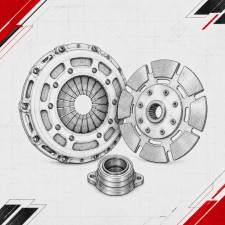
- Clutch: disc, mechanism, clutch release bearing, and control.
- Flywheel: flywheel adapted to the configuration.
- Drivetrain: driveshafts, universal joints, and cardan shaft bellows.
- Mounting: brackets and mounting brackets.
Braking System for the Porsche 911 SC in Rally Competition
The braking system of the Porsche 911 SC must be adapted to the car’s power, weight, tires, and intended use.
The historical data sheet includes braking system variations from 1978 and 1980. A 1981 update also documents a hydraulic handbrake.
Before ordering brake pads or brake discs, you must precisely identify the brake calipers, the brake disc sizes, and the installed mounting.
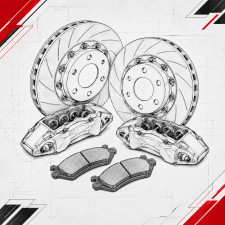
- Front: front disks, racing pads, calipers, and repair kits.
- Rear: rear disc, pads, and caliper components.
- Hydraulics: master cylinders, flexible aviation hoses, and fittings.
- Handbrake: hydraulic control depending on the configuration.
- Fluid: high-temperature brake fluid.
- Cooling: brake sheaths and ducts.
Suspension, torsion bars, and running gear
The Porsche 911 SC features independent suspension with torsion bars at the front and rear. The weight distribution resulting from the rear-mounted engine requires precise tuning of the geometry, damping, and ride height.
A road-going setup prioritizes precise handling and control of body movements, while a Safari or gravel rally configuration requires greater compression and protection.
- Front suspension: shock absorbers, torsion bars, and macpherson struts.
- Front axle: control arms, rod ends, and linkages.
- Rear suspension: shock absorbers, torsion bars, and mounting.
- Rear axle: control arms, joints, and adjustment components.
- Anti-roll bars: bars, links, and bushings.
- Hubs: wheel bearings and related components.
- Alignment: appropriate adjustment components.
Porsche 911 SC Rims and Tires
Rally rims for the Porsche 911 SC must be selected based on the suspension system sizes, the braking system sizes, and the tires used.
The front and rear rim widths may differ. It is essential to check the diameter, width, center-to-center distance, ET offset, and caliper clearance.
- Front: Rims compatible with the braking system and fenders.
- Rear: Rims suited to the rear axle and tires.
- Tires: competition tires for asphalt or dirt.
- Mounting: wheel studs and nuts.
- Accessories: valves and mounting components.
Cockpit, seats, and rally equipment
The cockpit of a Porsche 911 SC race car must ensure proper seating for the driver and co-driver, with a driving position that allows for precise control of the controls.
- Driver: seat, brackets, harness, and mounting components.
- Co-driver: seat, harness, and footrests.
- Steering: racing steering wheel, hub, and spacer.
- Controls: shift shifting handle and pedal support.
- Communication: driver/co-driver intercom.
- Navigation: lighting and accessories for route notes.
Roll cage and safety features for a Porsche 911 SC VHC
The preparation of a historic Porsche 911 SC must comply with the safety requirements applicable to its discipline and reference period.
The approval form,FIA Appendix K, the PTH, and the event regulations must be consulted before determining which equipment is authorized or mandatory.
- Structure: regulation roll cage or roll cage.
- Protection: roll bar pads.
- Restraint: seats, harnesses, and mounting points.
- Fire: fire extinguisher or fire suppression system.
- Electrics: cut-out device.
- Crew: helmets, hans devices when required, racing suits, flame-retardant clothing, gloves, and boots.
FIA standards and equipment validity dates must be verified in accordance with currently applicable regulations.
Bodywork and Protections: Tarmac or Safari
The body of the Porsche 911 SC must be prepared according to its intended use. An asphalt rally car and a Safari configuration require different protection components and ride heights.
The Porsche 911 SCs from the 1978 Safari, in particular, featured a trussed body, a raised suspension, and specific underbody protection.
- Protection: engine, transmission, and underbody armor.
- Body: fenders, hood, bumpers, and adapted components.
- Mountings: quick-release fasteners when permitted.
- Towing: regulation towing hooks and towing straps.
- Rally: splash guards and mud flaps.
Oiling, Oil Cooling, and Instrumentation
On the air-cooled Porsche flat-six, monitoring oil temperature and oil pressure is essential to maintaining the engine’s reliability during competition.
The oiling system, hoses, fittings, filter, and oil cooler (if present) must be inspected before intensive use.
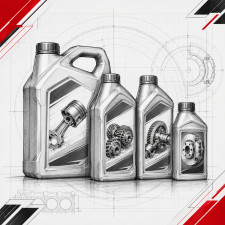
- Oiling: oil filter, hoses, fittings, and system components.
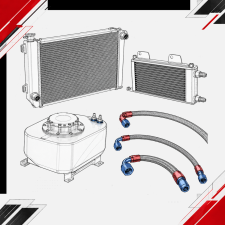
- Oil cooling: radiator and accessories, depending on the mounting.
- Engine cooling: turbocharger, ducts, and cooling fins.
- Instrumentation: oil pressure and temperature sensors.
- Electrical system: battery, wiring harness, relays, fuses, and cut-out devices.
Porsche 911 SC Fuel System
The fuel system of a rally-spec Porsche 911 SC must be inspected regularly, particularly the fuel tank, pumps, filters, hoses, and fittings.
The official Porsche cars in the 1978 Safari Rally used a 110-liter fuel tank, suitable for the long distances of the event.
- Tank: tank compliant with the specification.
- Fuel System: Fuel pump and accessories.
- Filtration: fuel filter.
- Injection: controllers and fuel supply components.
- Fuel hoses: hoses, fittings, and protection covers.
Maintenance and Rally Support: What Parts Should You Bring?
A competition-spec Porsche 911 SC requires maintenance tailored to its age, level of preparation, and usage. Scheduled maintenance for the engine, transmission, differential, and suspension must be performed.
- Engine: engine oil, filters, spark plugs, and firing components.
- Transmission: transmission fluid, driveshafts, and cardan shaft bellows.
- Brakes: brake pads, brake fluid, and brake caliper components.
- Suspension: bearings, rod ends, and linkages.
- Rims: studs, lug nuts, and valves.
- Electrics system: fuses, relays, and connectors.
How do you choose parts for a Porsche 911 SC rally car?
A part compatible with a street-legal Porsche 911 SC isn’t necessarily suitable for a historic rally car.
Before ordering, identify the model year, approval, engine configuration, transmission type, final drive ratio, differential, braking system, suspension, and rim sizes.
You should also consider the intended use: asphalt rally, VHC, or Safari preparation.
This approach helps you select the right Porsche 911 SC parts for rallying, whether you’re restoring the 3.0-liter flat-six, servicing the transmission, upgrading the brakes, or tuning the suspension and chassis.
Frequently Asked Questions About the Porsche 911 SC
What engine does the Porsche 911 SC have?
The Porsche 911 SC is powered by a naturally aspirated, air-cooled 2,994 cm³ flat-six engine. Power output for road-going versions ranges from 180 to 204 ch, depending on the model year.
Is the Porsche 911 SC rear-wheel drive?
Yes. Its engine is mounted in a rear overhang and drives the rear wheels, which affects its traction and handling in rally competition.
Did the Porsche 911 SC compete in the World Rally Championship?
Yes. Two factory-backed 911 SCs finished second and fourth in the 1978 Safari Rally. Walter Röhrl also drove a 911 SC in the 1981 Sanremo Rally.
What is the historical approval status of the Porsche 911 SC?
The FIA’s historical database lists, among others, specification No. 3062 in Group 3, with several technical extensions.
What is the difference between a Porsche 911 SC and a 911 SC Safari?
The Safari configuration features , in particular , increased ground clearance, modified suspension, reinforced body protection, and equipment specifically designed for off-road events.
What parts are needed to prepare a Porsche 911 SC for rallying?
The preparation involves the 3.0-liter flat-six engine, the injection system, the exhaust, the transmission, the clutch, the differential, the brakes, the suspension, the rims, the cockpit, the roll cage, and the oiling system.
Check your car's compatibility
You do not have any car selected. Identify it to ensure product compatibility.
Can't find the part you're looking for? Contact our team or call us on +41 (0)21 946 22 32, we'll help you find it.
Filters