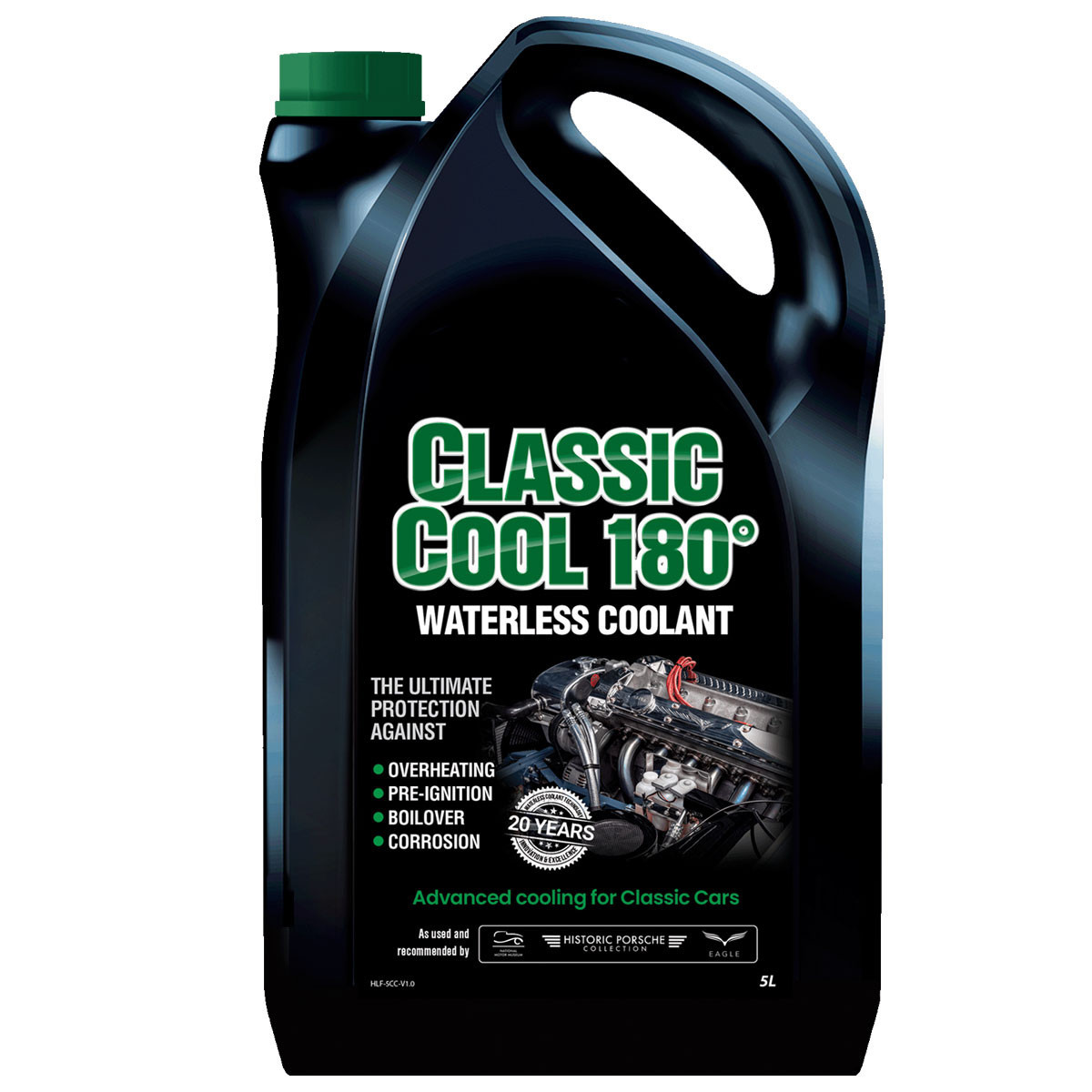
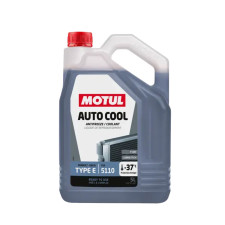
Hawk Classic Cool 180° 5L Waterless Cooling Fluid is specially formulated for classic and vintage cars, primarily those manufactured from approximately 1950 to 1980. It is particularly suitable for engines primarily constructed of cast iron and for cooling systems that also include steel, copper, and aluminum components.
Hawk Classic Cool 180° cooling fluid is used undiluted with water. Its boiling point, which exceeds 180°C, and its freezing point, which is below -40°C, help reduce issues related to water boiling, vapor formation, corrosion, and cavitation—features that are particularly beneficial for preserving the cooling systems of older vehicles.
Note: The years 1950 through 1980 serve as a guideline to help select the right product. Engine design and the materials used in the cooling system remain the primary considerations. Hawk specifies that Classic Cool 180° is not suitable for thermosiphon cooling systems.
Important: Properly prepare the system with Prep Fluid
Preparing the system is essential before switching to Hawk waterless cooling fluid if the engine contains or has contained water-based cooling fluid. In a classic car, simply draining the system may leave residual water in the engine block, radiator, heater, or various pipes.
The conversion must therefore be properly carried out beforehand using the Prep Fluid 5L preparation fluid. This helps remove any residual water remaining after the drain before the final fill with Hawk Classic Cool 180° waterless cooling fluid.
After conversion, Hawk recommends that the residual water content be ideally 3% or less. This value can be checked using a refractometer. Careful preparation is essential to fully enjoy the benefits of a water-free cooling system.
The Benefits of Hawk Classic Cool 180° Cooling Fluid
- Specially formulated forclassic cars: designed for classic engines, primarily cast iron, with steel, copper, and aluminum components.
- 100% water-free: Can be used undiluted with water after proper preparation of the water circuit.
- Boiling point above 180°C: significantly limits boiling and vapor formation in the hottest areas of the engine.
- Freezing point below -40°C: no additional antifreeze is required.
- Low vapor pressure: reduces stress on hoses, gaskets, and various cooling system components.
- Reduced cavitation erosion: helps preserve the components of the cooling system.
- Corrosion protection: The absence of water helps eliminate oxidation corrosion, according to Hawk—a particularly valuable benefit for older engines and cooling systems.
- Heat protection: Reduced vapor formation and hot spots help limit certain overheating conditions that can lead to cylinder head gasket failure.
- Less stress on the water pump: low vapor pressure and reduced cavitation help preserve the water pump and cooling system.
- Extremely long operating time: Hawk waterless coolant is designed for extremely long-term use when used properly and not contaminated with water.
Features of Hawk Classic Cool 180° 5L Waterless Cooling Fluid
- Type: Waterless engine cooling fluid
- Brand: Hawk Waterless Coolants
- Range: Classic Cool 180°
- Capacity: 5 liters
- Application: Classic cars / vintage cars
- Recommended for: Vehicles from approximately 1950 to 1980
- Engine type: Classic engines, primarily cast iron
- Materials: Cast iron / steel / copper / aluminum
- Usage: Undiluted with water
- System preparation: Pre-treatment with Prep Fluid when converting from a water-based coolant
- Boiling point: Above 180°C
- Freezing point: Below -40°C
- Water content after conversion: Ideally ≤ 3%
- Water content check: Refractometer
- Color: Light green
- Thermosiphon compatibility: No
- Former brand name: Evans Waterless Coolants
- Former product name: Evans Classic Cool 180°
Why is Hawk Classic Cool 180° suitable for classic cars?
Classic cars often have engines and cooling systems that are very different from those of modern vehicles. In particular , cast iron, steel, and copper are much more prevalent, while aluminum is gradually appearing in certain components. Hawk developed Classic Cool 180° specifically for this type of construction.
As a general guideline, this formulation is particularly well-suited for classic cars produced between approximately 1950 and 1980. However, this timeframe is not a hard-and-fast rule: to select the right Hawk coolant, you must also consider the engine’s design and the materials used in its cooling system.
For older vehicles, particularly those dating from before 1950 that contain more yellow metals and certain older cast irons, Vintage Cool 180° will generally be more appropriate. For newer vehicles and high-performance engines, Hawk offers Power Cool 180°, among other options .
Why switch a classic car to waterless cooling fluid?
In a classic or collector’s car, switching to Hawk Classic Cool 180° water-free cooling fluid is particularly beneficial for preserving the cooling system. Removing water helps reduce several issues directly associated with its presence: oxidation-induced corrosion, cavitation, pressure buildup, and high-temperature vapor formation.
Corrosion is a particularly significant concern in classic vehicles, whose engines, radiators, and cooling systems may combine multiple metals and be several decades old. According to Hawk, the absence of water eliminates oxidation-induced corrosion and thus helps preserve the system’s components.
In the hottest areas of the engine, a conventional cooling fluid can also begin to vaporize. This significantly reduces heat transfer to metal surfaces and can cause localized hot spots. These phenomena can contribute to overheating and create conditions that lead to cylinder head gasket failure.
With a boiling point exceeding 180°C, Hawk Classic Cool 180° cooling fluid remains liquid at temperatures at which standard cooling fluid may begin to vaporize. This ensures the cooling fluid stays in contact with hot metal surfaces and maintains more uniform heat transfer.
Caution for vehicles equipped with thermosiphon cooling systems
Hawk Classic Cool 180° is not suitable for thermosiphon cooling systems. It is essential to verify this information before converting a classic vehicle.
A thermosiphon relies on the natural circulation of fluid created by differences in temperature and density, rather than the forced circulation found in modern cooling systems. If your vehicle uses this cooling principle, do not choose the Classic Cool 180°.
A slightly higher engine temperature may be normal
After switching to a Hawk water-free cooling fluid, the displayed operating temperature may rise slightly. Hawk indicates that an increase of approximately 3 to 7°C may be observed after conversion.
This difference does not necessarily mean the engine is overheating. The coolant remains liquid at high temperatures and helps limit vapor formation and localized hot spots in the engine.
Evans Classic Cool Becomes Hawk Classic Cool
Evans Waterless Coolants is now known as Hawk Waterless Coolants. This change concerns the brand identity and not the product formulation. The former Evans Classic Cool 180° waterless cooling fluid is now Hawk Classic Cool 180°. If you were already using Evans Classic Cool, you’ll now find this formulation under the Hawk brand.
GT2i is an official retailer of the Hawk Waterless Coolants brand. At GT2i, you’ll find Hawk waterless cooling fluids as well as the products needed to prepare and convert your cooling system.
How do you switch to Hawk Classic Cool 180° waterless cooling fluid?
When converting from a conventional cooling fluid, start by thoroughly draining the system, then prepare it with Prep Fluid. This process helps remove as much residual water as possible from the engine and cooling system after draining.
Use the 5L Prep Fluid before the final fill. After conversion, Hawk recommends that the residual water content be ideally 3% or less, which can be checked using a refractometer.
Once the cooling system has been properly prepared, Hawk Classic Cool 180° can be used undiluted with water. The volume required for filling is comparable to that used with a standard cooling fluid.
Hawk Classic Cool 180° must never be intentionally diluted with water. Adding water gradually negates the benefits sought with a waterless cooling fluid.
FAQ - Hawk Classic Cool 180° Waterless Cooling Fluid
For which cars is Hawk Classic Cool 180° recommended?
Classic Cool 180° is designed for classic and vintage cars, particularly those with engines primarily made of cast iron and featuring steel, copper, and aluminum components. As a general guideline, it is particularly suited for vehicles from approximately 1950 to 1980.
Which Hawk coolant should I choose based on my car’s age?
As a general guideline, Vintage Cool 180° is primarily suited for vehicles built up to around 1950, Classic Cool 180° for classic cars from around 1950 to 1980, while formulations for newer vehicles should be chosen based on the engine and its intended use. The year is only a guideline: the engine design and the materials used in the cooling system must always be taken into account.
Is Hawk Classic Cool 180° suitable for thermosiphon systems?
No. Hawk specifies that Classic Cool 180° is not suitable for thermosiphon cooling systems. This must be verified before converting any classic car.
Why use a water-free coolant in a classic car?
The absence of water helps prevent oxidation-induced corrosion, cavitation, and vapor formation at high temperatures. These properties are particularly beneficial for preserving older cooling systems that combine cast iron, steel, copper, and aluminum.
Should Prep Fluid be used before Hawk Classic Cool 180°?
Yes, when converting from a system that contains or has contained a water-based coolant. Simply draining the system may leave water in the engine. The system must therefore be properly prepared with Prep Fluid 5L before the final fill.
What quantity of water can remain after the conversion?
Hawk recommends that the residual water content be ideally 3% or less. This value can be checked with a refractometer.
Can Hawk Classic Cool 180° be mixed with water?
No. Hawk Classic Cool 180° must not be intentionally diluted with water, as this reduces the benefits sought with a water-free cooling fluid.
Can water be added in the event of a breakdown or emergency?
Yes, but only as a temporary fix if it is impossible to top off the water level with Hawk fluid. This solution must remain temporary. After adding water, you must drain the system again and perform a complete system flush with Prep Fluid before refilling with Hawk waterless coolant.
Do I need to add antifreeze to Hawk Classic Cool 180°?
No. The coolant already has a freezing point below -40°C. No additional antifreeze should be added.
Is it normal for the engine temperature to be slightly higher after the conversion?
Yes. Hawk indicates that an increase of approximately 3 to 7°C may be observed after switching to waterless coolant. This difference does not necessarily mean that the engine is overheating.
Are Evans Classic Cool and Hawk Classic Cool the same product?
Yes. Evans Waterless Coolants has become Hawk Waterless Coolants. The former Evans Classic Cool 180° is now marketed as Hawk Classic Cool 180°. The formulation remains unchanged.