
Cartek GT Electronics Cut-Out Device with External Button

Reference:
CK-BG06R
Supplier Ref.:
CK-BG-06-R
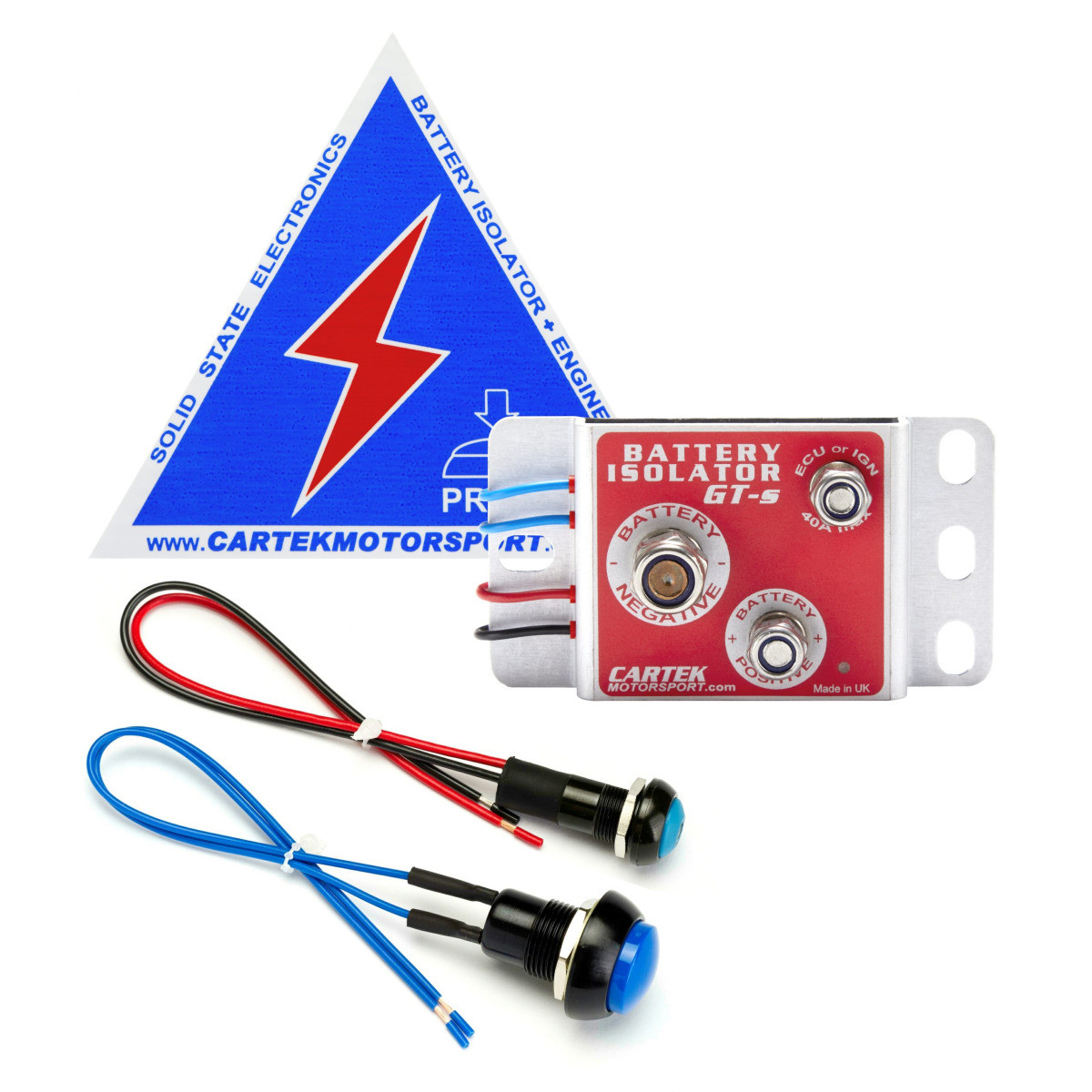
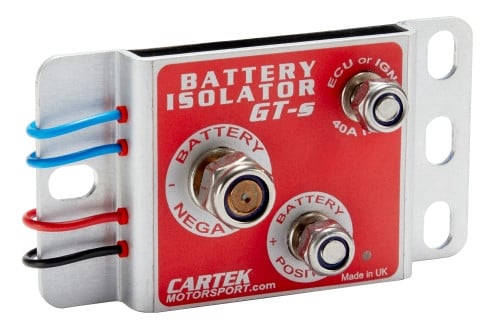
The Cartek GT electronic circuit breaker is designed to shut off the engine and isolate the battery from all electrical circuits in a competition vehicle. Suitable for rally and track applications, it combines a 600 A battery negative cut-out device with a protected 40 A engine shut-off outlet.
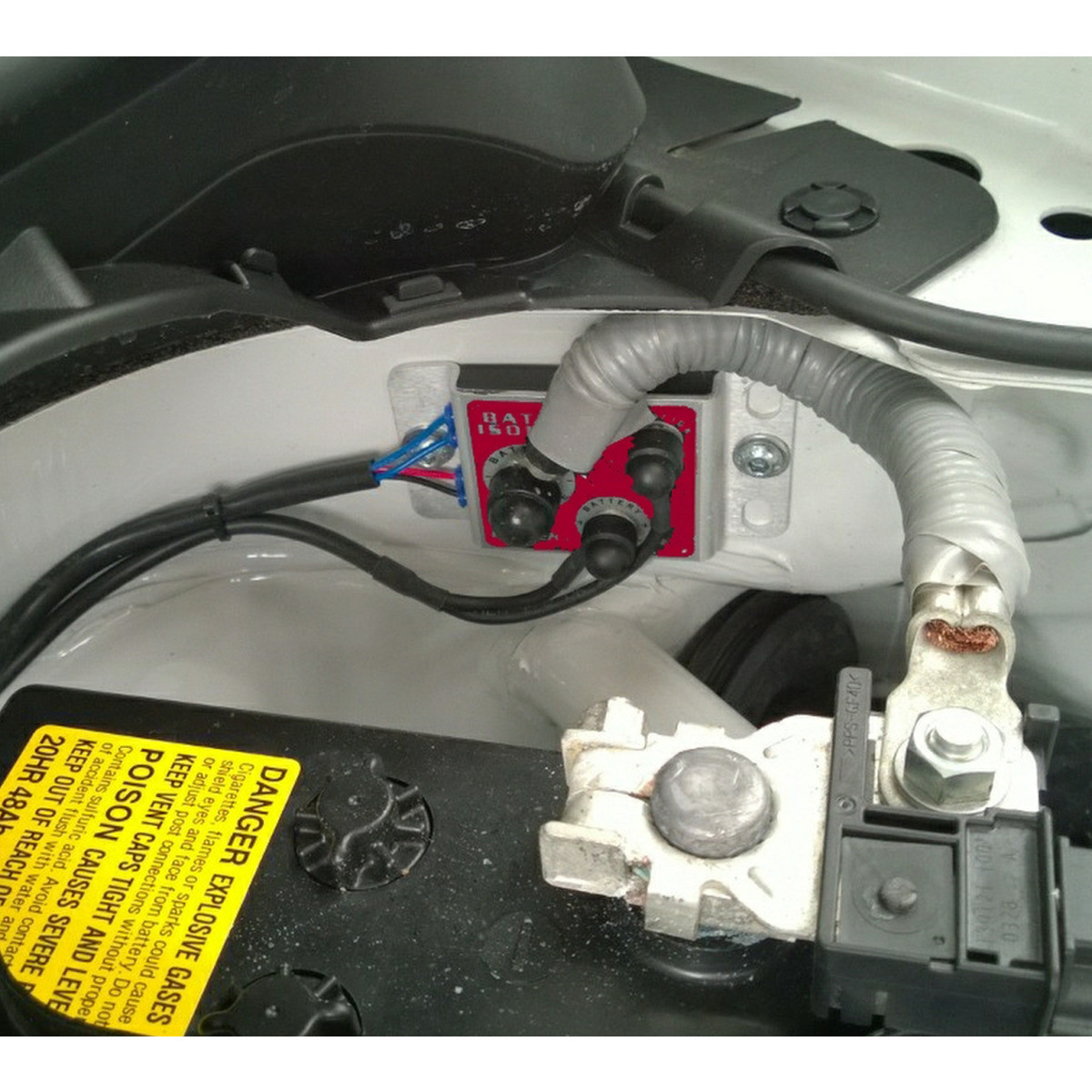
Its fully electronic design, with no moving parts, allows it to replace a mechanical cut-out device. The unit is mounted near the battery to minimize the length of the power cables.
Engine Shutdown and Electrical Isolation
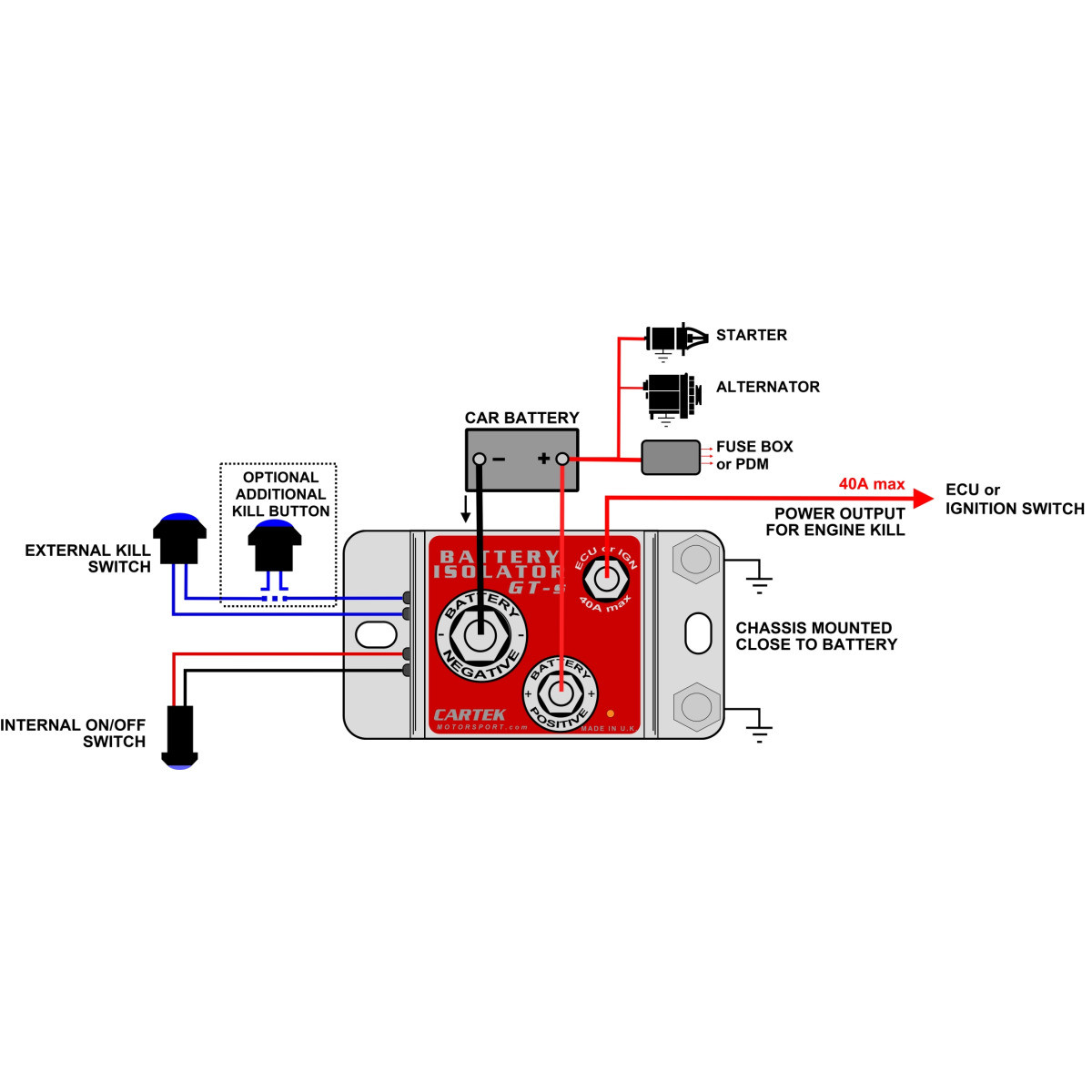
When a cut-off command is triggered, the Cartek GT interrupts power to the engine control module or the ignition system to shut down the engine. It then disconnects the battery’s negative terminal from the vehicle’s ground, thereby isolating the battery from the electrical systems.
Protection against generator-related overvoltage is built into the unit. No additional external components are required to provide this function.
Interior Control and Exterior Shut-Off
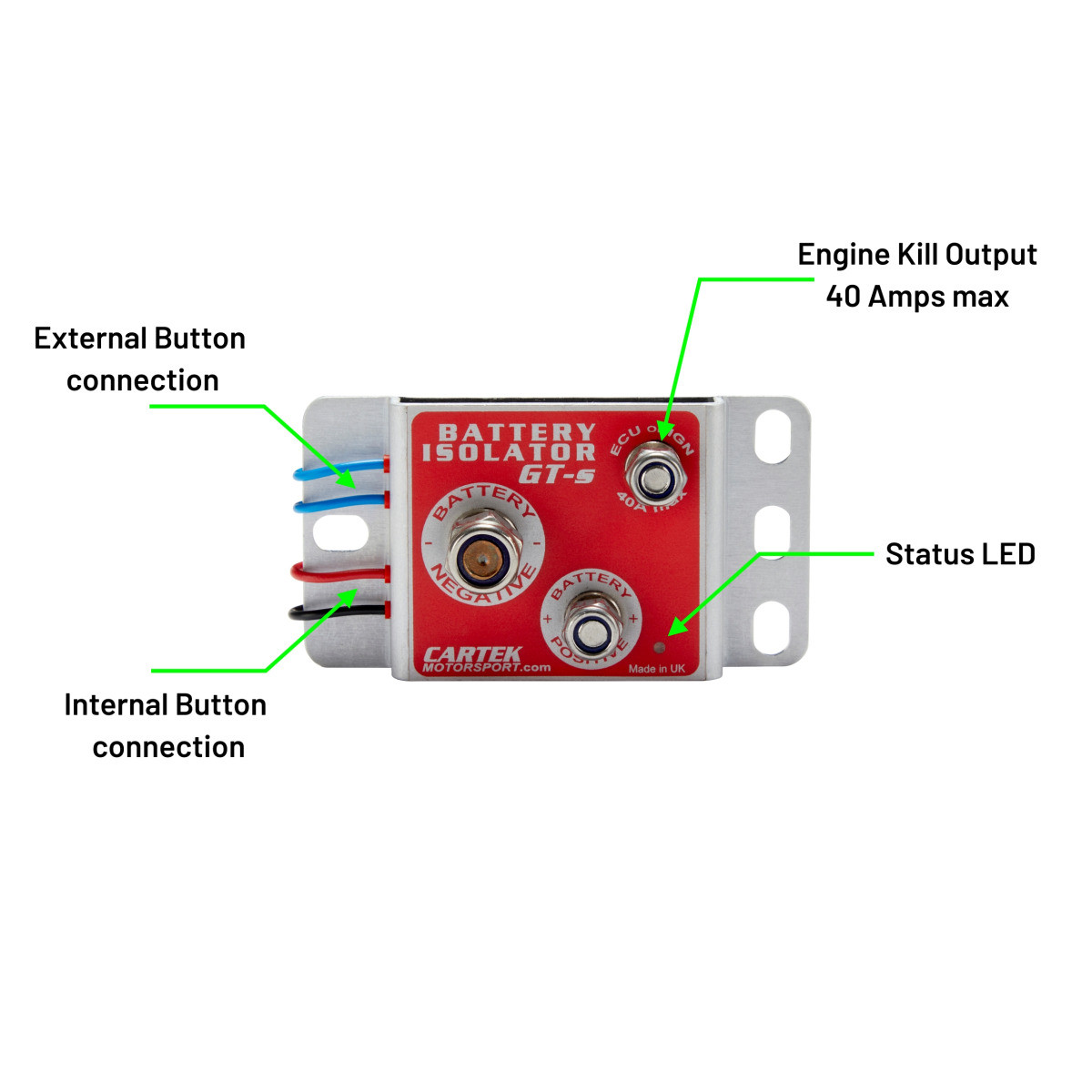
The interior button allows the driver to turn the system on and off. The red exterior button is used solely to trigger the emergency shutdown. The controls connect to the housing using thin-gauge wires.
Technical Specifications
- Brand: Cartek
- Model: Battery Isolator GT
- Manufacturer’s kit part number: CK-BG-06-R
- Version: kit with interior and exterior controls, red exterior control knob
- Technology: fully electronic, no moving parts
- Operating voltage: 7 to 18 V
- Battery negative disconnect current: 600 A
- Peak current: 2,000 A
- Engine shut-off outlet: protected power supply, 40 A maximum
- Consumption during operation: 50 mA
- Standby consumption: 7 mA
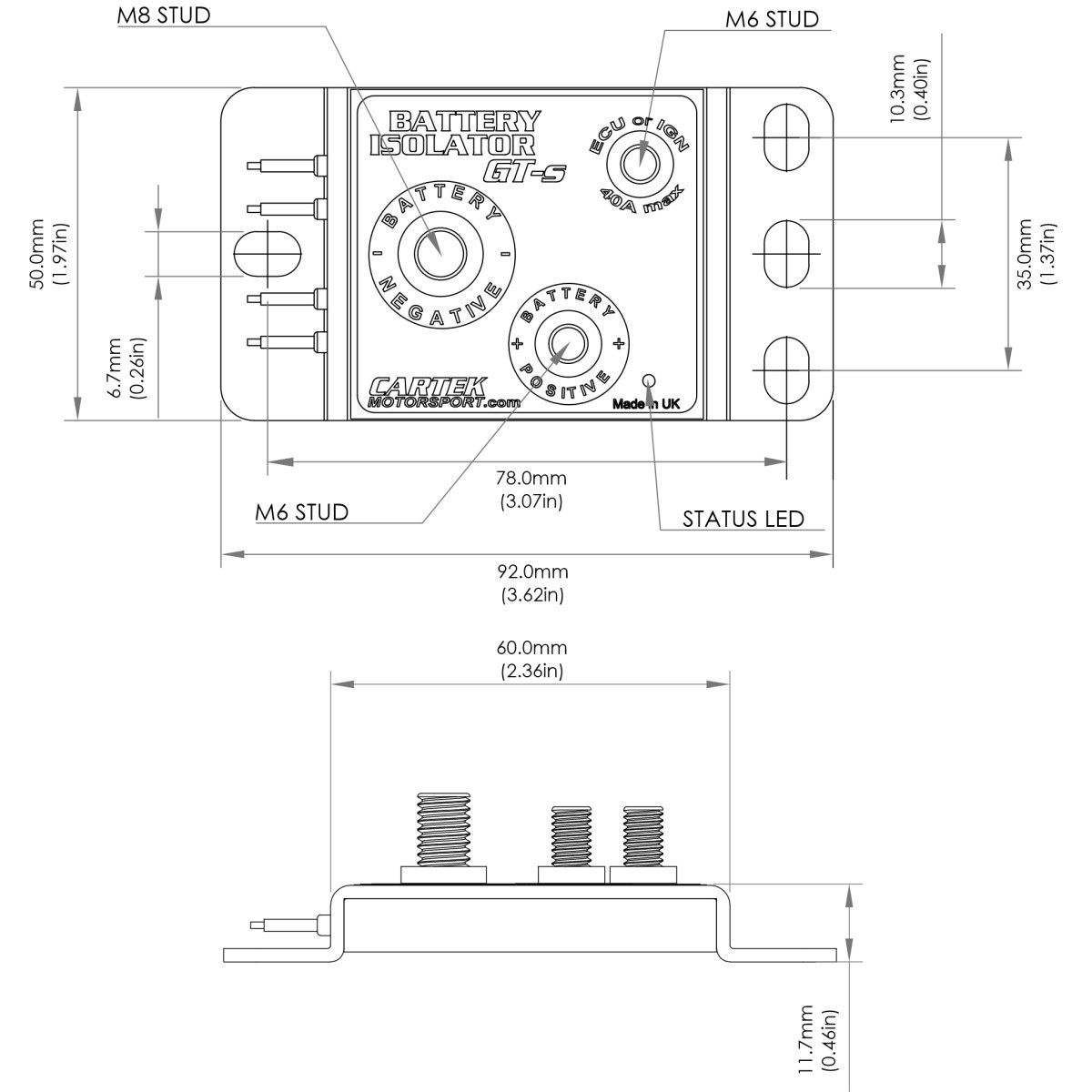
- Housing sizes: 93 × 50 mm
- Housing weight: 120 g
- Operating temperature: −10 to +85 °C
Installation
Install the housing near the battery and follow the Cartek wiring diagram. The connection to the engine shut-off circuit must be adapted to the vehicle’s electric power system and the current limit of the dedicated outlet.
Products intended for vehicle modification for competition purposes may render their use prohibited on public roads, insofar as they significantly alter the vehicle's characteristics as specified in the type-approval certificate issued by the relevant authorities (noise level, pollutant emissions, maximum speed, tire dimensions, etc.).