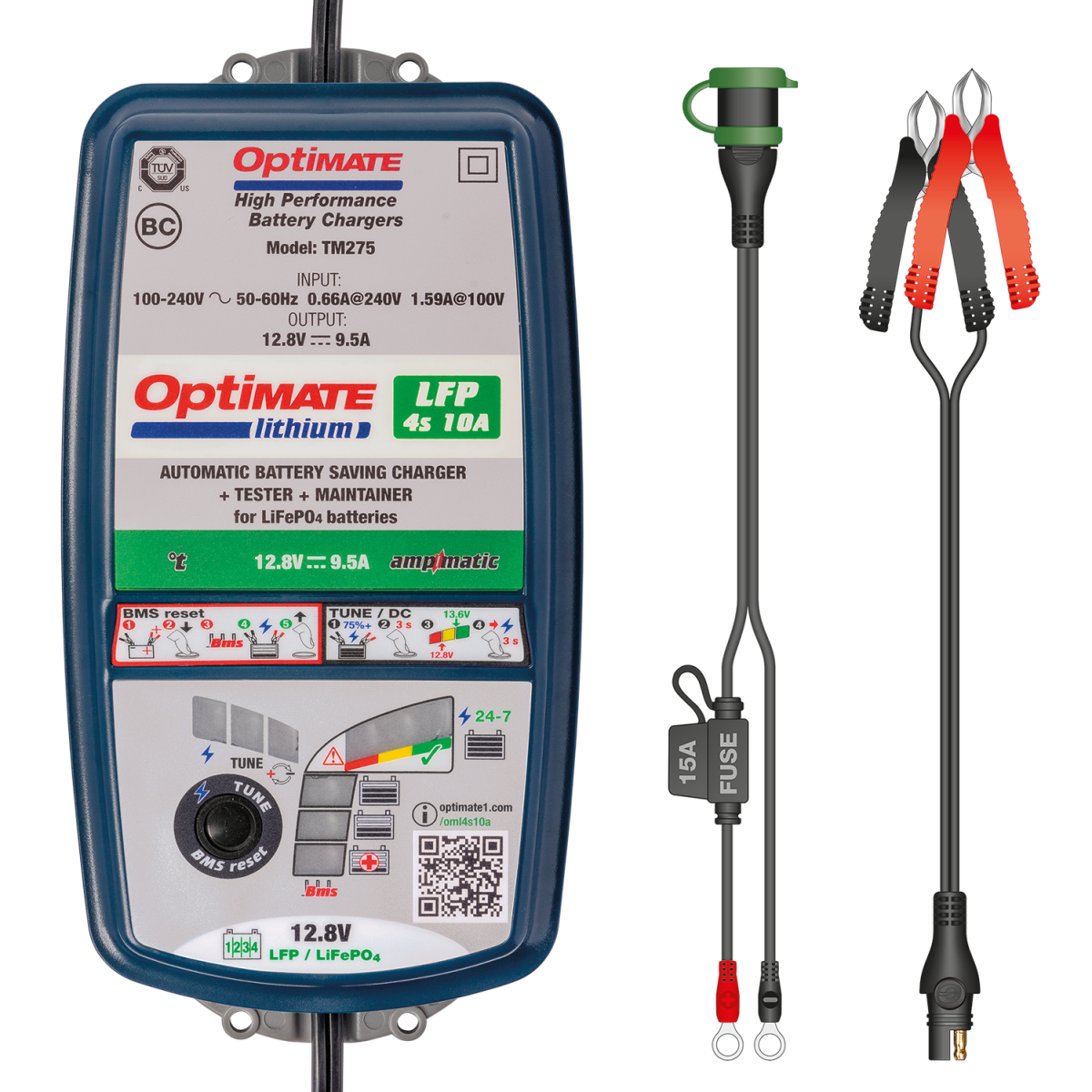
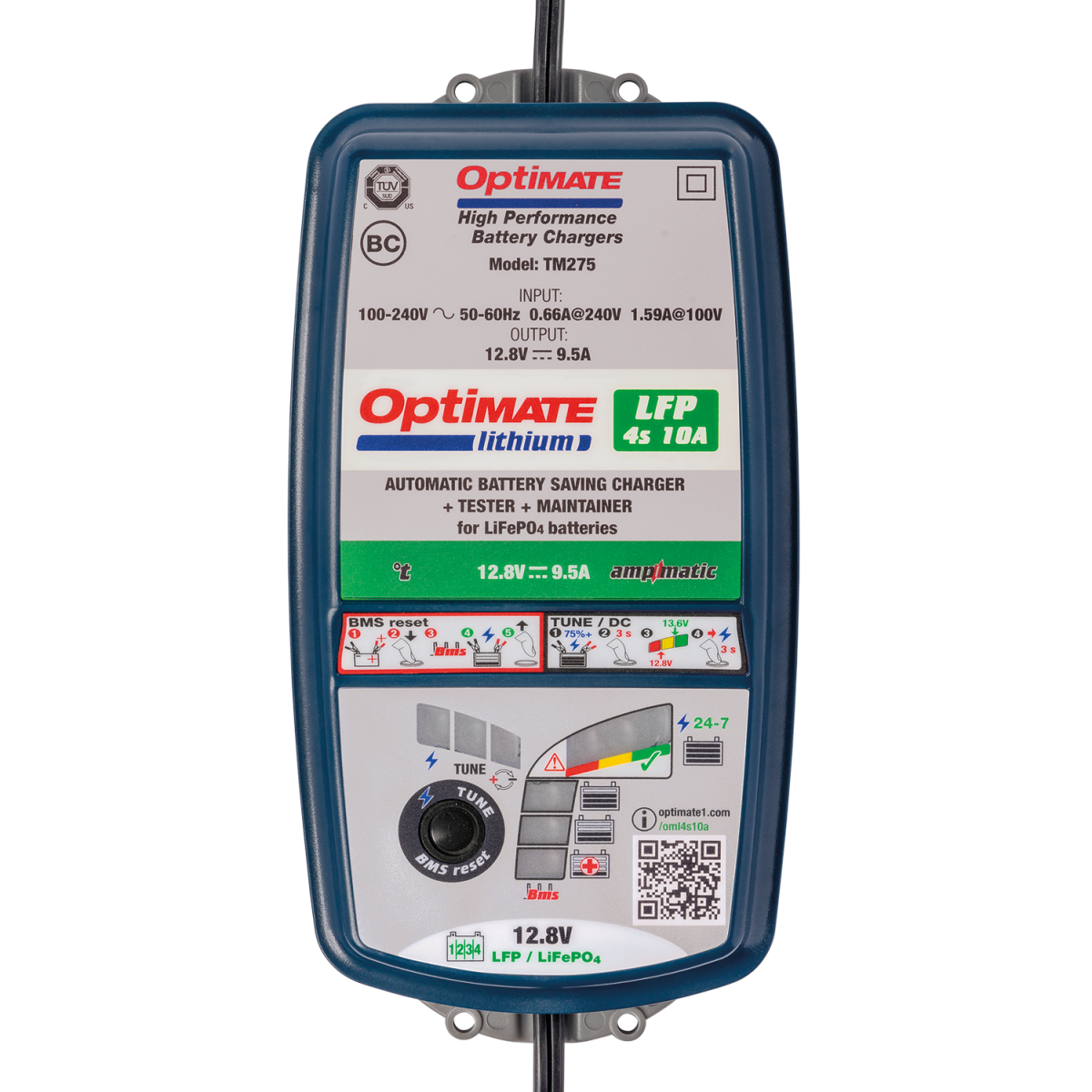
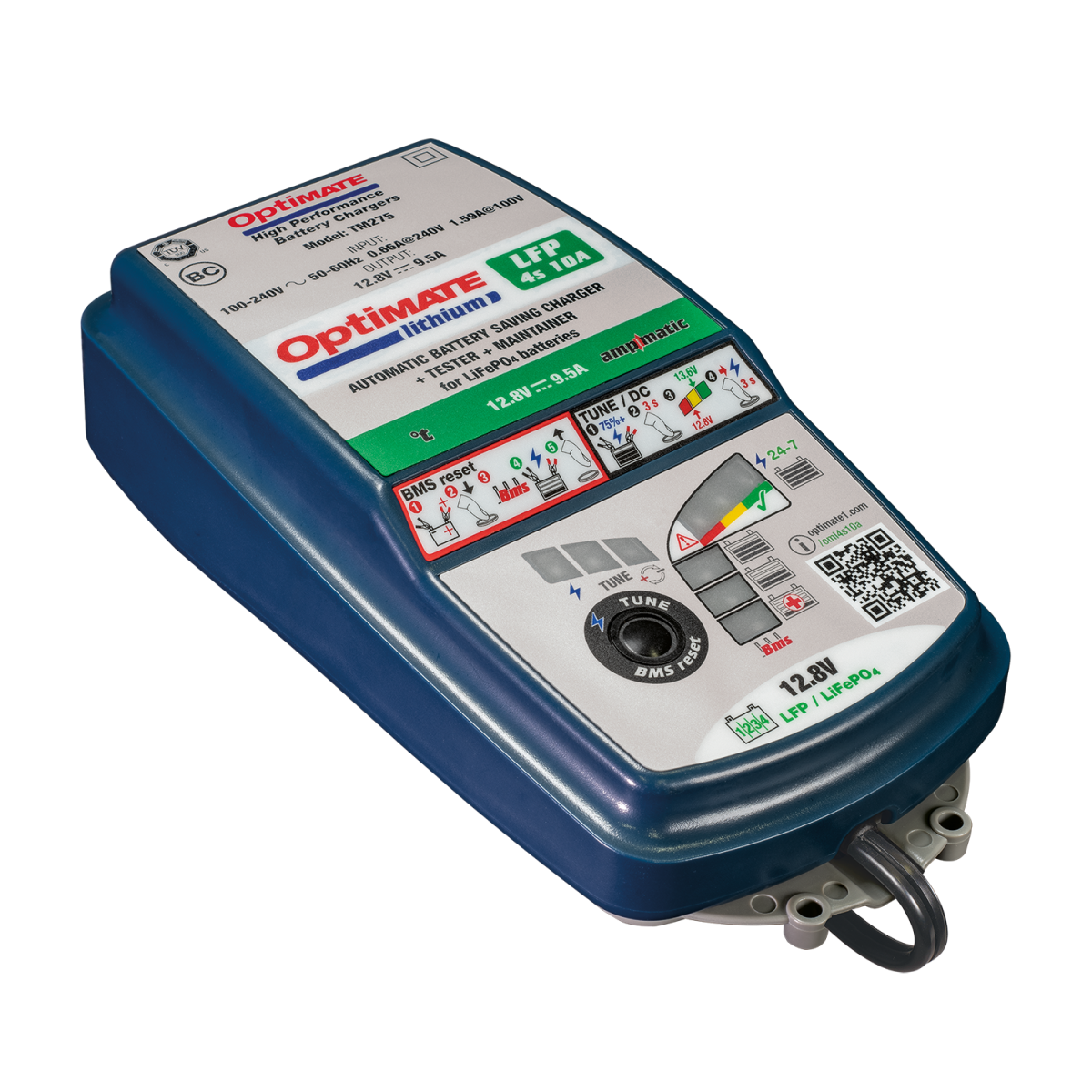
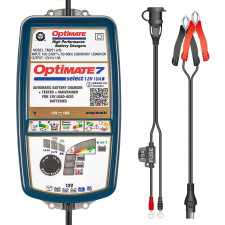
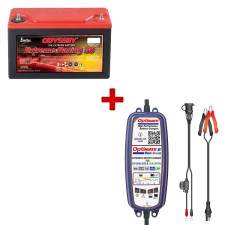
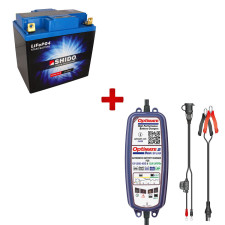
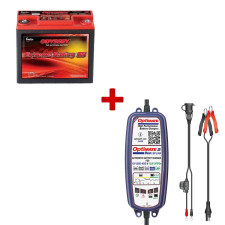
The OptiMate Lithium 4S 10A is a battery charger, trickle charger, tester, and catch tank specifically designed for 4-cell 12.8 V and 13.2 V LiFePO4 lithium batteries.
With its maximum charging current of 10 A and its fully automatic 10-step program, it perfectly meets the requirements of race cars, rally cars, track cars, restored classic cars, and racing motorcycles equipped with lithium batteries.
Its TUNE mode also provides a stable power supply during diagnostics, ECU programming, or battery replacement. This makes it a particularly well-suited solution for tuners, teams, and workshops specializing in motorsports.
A lithium charger designed for motorsports
LiFePO4 lithium batteries are frequently used in competition to reduce vehicle weight and improve performance. However, they require a specific charging program, different from that used for lead-acid or AGM batteries.
The OptiMate Lithium 4S 10A is designed exclusively for 12.8 V and 13.2 V LiFePO4 or LFP batteries consisting of four cells connected in series. It supports batteries with capacities ranging from 3 to 120 Ah.
It is particularly well-suited for:
- rally cars;
- track cars;
- historic race cars equipped with a lithium battery;
- prototypes and competition vehicles;
- racing motorcycles;
- sports cars or classic cars used occasionally;
- lithium batteries used in workshops and paddocks.
Fast charging and Ampmatic current up to 10 A
The Ampmatic charging current can reach 10 A. It is automatically adjusted based on the battery’s capacity, condition, and charge level.
This automatic control allows the charger to be used with both small competition lithium batteries and higher-capacity batteries. A low-capacity battery receives a reduced current, while a larger battery benefits from a higher charging current.
The user does not need to manually select a voltage of 12.8 V or 13.2 V: the charger automatically identifies and manages the connected battery.
10-Step Automatic Charging Program
The OptiMate Lithium 4S 10A uses a fully automatic 10-step program to safely charge, test, and maintain the battery.
Once connected, the charger analyzes the battery, adjusts the current, proceeds with charging, and then checks its ability to retain power. It can also alert the user when a battery is faulty or can no longer hold power properly.
No constant monitoring is required: simply connect the battery and let the charger automatically manage the entire process.
Recovery of Deeply Discharged Lithium Batteries
The battery charger can start its program with a battery having a minimum residual voltage of 0.5 V.
Its three-step low tension recovery program attempts to reactivate a deeply discharged lithium battery, provided it is not permanently damaged.
This feature is particularly useful when a race car has been idle for a long period or when electrical equipment has accidentally drained the battery.
BMS Reset
When a lithium battery reaches an excessively low discharge level, its electronic battery management system (BMS) may cut off power output to protect the cells.
The reset function allows you to quickly recharge the battery and attempt to reactivate the BMS. This feature can prevent the premature replacement of a battery that has simply gone into safety mode after a deep discharge.
TUNE Mode for Vehicle Diagnostics and Programming
TUNE mode transforms the charger into a regulated power supply to maintain a constant voltage during sensitive electronics operations.
This feature is particularly useful in racing workshops for:
- programming or updating an ECU;
- electronics diagnostics;
- troubleshooting;
- making adjustments with the engine off;
- demonstrating a vehicle on display;
- preserving stored parameters when replacing the battery;
- installation of electrical accessories.
TUNE mode minimizes the risk of voltage drops that could interrupt programming or disrupt the vehicle’s electronics.
Automatic maintenance between races
A race car may remain stationary for several days or weeks between races. During this time, control modules, data acquisition systems, alarms, or residual electrical consumption can gradually drain the battery.
The OptiMate Lithium 4S 10A can remain connected at all times to automatically monitor and maintain the battery. Its electronics management system provides 24/7 maintenance without the risk of overcharging.
This ensures the battery remains ready for the next start, drive, or event.
Automatic Battery Health Check
After charging, the OptiMate Lithium 4S 10A checks the battery’s ability to retain its power.
This test makes it easier to identify a lithium battery that is fatigued, damaged, or unable to hold a charge properly. The charger alerts the user when it detects abnormal behavior.
This feature is particularly useful in competition, where a faulty battery can cause starting problems or force a race to be interrupted.
Comprehensive Electronics Safety
The OptiMate Lithium 4S 10A can be used with the battery installed in the vehicle. It is fully compatible with the vehicle’s onboard electronics.
Its protections include:
- no risk of overcharging;
- no sparks when connecting;
- short-circuit protection;
- automatic shutdown if the battery is disconnected;
- automatic control of the charging current;
- long-term maintenance without supervision.
The battery charger can therefore remain connected to the battery during extended periods of inactivity.
The housing is hermetically sealed and has resistance to dust and the elements. It can be used both indoors and outdoors, down to a minimum temperature of -40 °C.
Its approximately 3.70-meter charging cable with an SAE connector makes it easy to connect to a battery installed in a hard-to-reach compartment.
Low Consumption of Electrics
The OptiMate Lithium 4S 10A uses energy-efficient technology. Its standby consumption is less than 0.5 W.
This low consumption allows the battery to be maintained over a long period while minimizing the charger’s consumption.
Technical Specifications
| Specification | Specification |
|---|
| Product Type | Charger, battery maintainer, tester, and catch tank |
| Compatible technology | Lithium LiFePO4 / LFP |
| Nominal voltage | 12.8 V / 13.2 V |
| Battery configuration | 4 cells in series |
| Compatible battery capacity | 3 to 120 Ah |
| Maximum charging current | 10 A Ampmatic |
| Number of stages | 10 |
| Operating range | 0.5 to 14.4 V |
| Minimum recovery voltage | 0.5 V |
| Low-tension recovery | 3-step program |
| BMS reset function | Yes |
| Stabilized power mode | Yes, TUNE mode |
| Battery Health Test | Yes |
| Long-term hold | Yes, 24 hours a day, 7 days a week |
| Operation | Fully automatic |
| Mains power | 100 to 240 V, 50/60 Hz |
| Standby consumption | Less than 0.5 W |
| Usage | Indoor and outdoor |
| Minimum operating temperature | -40 °C |
| Charging cable length | Approximately 3.70 m |
| Connector | SAE |
| European model | TM274 |
| Manufacturer's warranty | 3 years |
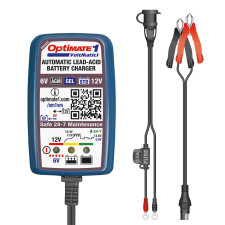
Included items:
- 1 OptiMate Lithium 4S 10A charger;
- 1 permanent connection cable with eyelet terminals;
- 1 set of battery pliers;
- 1 charging cable with SAE quick-connect connector.
Key Features
- Specially designed for LiFePO4 lithium batteries;
- Suitable for race cars and motorcycles;
- Compatible with batteries ranging from 3 to 120 Ah;
- automatic charging current up to 10 A;
- Fully automatic 10-step charging program;
- recovery of discharged batteries down to 0.5 V;
- BMS reset function;
- TUNE mode for programming and electronics diagnostics;
- automatic battery health check;
- long-term charge maintenance;
- Comprehensive electronic protections;
- waterproof and resistant to weather conditions;
- Operable down to -40 °C.
GT2i Tip:
The OptiMate Lithium 4S 10A is recommended for competition vehicles equipped with a four-cell 12.8 V or 13.2 V LiFePO4 lithium battery.
Before connecting the charger, be sure to check the technology specified on the battery. This model must not be used to charge a lead-acid, AGM, GEL, or lithium battery that uses a technology other than LiFePO4.
For programming or diagnostic operations, enable TUNE mode to maintain a stable power supply throughout the procedure.